Showing posts with label health improvement. Show all posts

Friday, 9 May 2014


Happiness at Work
The key to tackling mental health problems?

The equation seems simple; a healthy workforce equates to a happy workforce which results in a more productive and successful organisation. This is good for society and the country’s economy. However in reality the picture is bleak, suggesting that this formulae is neither being understood nor utilised.

Unfortunately, poor mental health is not uncommon in today’s society. In Britain, one in four adults will experience a diagnosable mental health problem in any one year, despite the UK being one of the richest countries in the developed world. Whilst wealth does not necessarily lead to happiness, having a good standard of living, access to free healthcare, can certainly improve a society’s wellbeing. However, not so surprisingly, 80 percent of people with a mental health problem believe that their condition is associated to work related problems. Does this imply that employers do not understand the equation mentioned above? Or are they so intent on achieving their outcomes that they choose to ignore it, not realising that the long term affects of poor mental health can be catastrophic for society. 

With one in six working Britons experiencing a mental health issue at any one time, including depression, anxiety or stress - more needs to be done to address these unsettling statistics.

In the run up to Mental Health Awareness Week (12th – 18th May) two significant, and timely, documents have been published; a survey by Depression Alliance revealing that a third of people struggle to cope at work due to stress/exhaustion, and a report entitled “Depression in the Workplace in Europe: new insights from business leaders", which makes the argument that employers need to be more responsible for the wellbeing of their employees and the benefits this has on the country’s economy and society as a whole.

At any one time in Britain one worker in six will be experiencing depression, anxiety or problems relating to stress. Among people who describe their mental health as poor, 80% say this is at least in part a result of problems at work

The report, which was published at the end of April, suggests that mental health problems are the leading cause of disability worldwide, affecting 350 million people. More over, depression disproportionally affects adults of working ages and the financial impact on business and the economy is profound. Recent figures, from the London Schools of Economics and Political Science and King’s College London, shows that the annual cost of depression to European businesses is a staggering £77 billion. This is directly a result of lost productivity.

Presenteeism, as identified in the report, can be as detrimental to the organisation and the individual, as much as absenteeism, if not more. In the UK, it is believed that 1.5 times as much work is lost through presenteeism as absenteeism for mental health conditions. This can be attributed to two reasons; firstly, employees with depression also experience cognitive symptoms (difficulty concentrating, indecisiveness and forgetfulness) up to 94% of the time, hindering their performance in the workplace. Secondly, employees are reluctant to take time off work, even when they need to, due to fear of losing their job or demotion, which could compromise their finances. This therefore fuels their stress and can augment and prolong existing mental health conditions. 

In the UK it is argued that 1.5 times as much work is lost through presenteeism as absenteeism for mental health conditions

Time off work or reduced productivity at work can 
affect finances and push people into debt

Having a mental health problem can impact all aspects of our every day life including our relationships with family, friends and colleagues. The Depression Alliance survey which involved 1,200 people, found that 83 percent affected by a mental health problem at work also experienced isolation or loneliness. However, only half of those feeling depressed or lonely confided in a colleague, yet a large proportion who did, reported to have felt better.

Mental health problems can affect any of us, however, in spite of this, there is a widespread lack of awareness, especially in the workplace, of how to recognise the signs and support people. Colleagues and managers may not know how, or feel confident, in supporting someone with a mental health condition, and moreover may not be aware what, if any, the companies policy is on mental health. The report stated that the majority of workplaces (78% in the UK), do not have a formal mental health policy in place and would most likely benefit from reviewing how they deal with depression. Not surprisingly, many employees are reluctant to inform their managers if they know that they have a problem due to fear of facing prejudice or stigmatisation. This of course can escalate feelings of isolation.

Chief Executive of Depression Alliance, Emer O'Neill says, "Depression is the biggest mental health challenge among working-age people and often leads to considerable loneliness and isolation at work. However, many companies aren't properly equipped to manage employees who suffer from depression so providing support to these individuals in the workplace is essential”.

Who’s responsibility is it anyway?

We are all susceptible to experiencing a mental health problem. Research suggests that around 50 percent of our mental health can be attributed to our genetics and environment, but the remaining can be altered by our activities and steps we take in life to protect our mental health. With such a high percentage of mental health problems related to work (it is where we spend the majority of our adult life) more needs to done to protect the mental health and wellbeing of employees. Employers therefore should create a supportive environment that reduces the taboo around mental health, but also implement strategic health and wellbeing plans with the sole intention of protecting their workforce and providing managers and colleagues with the knowledge and tools to deal with mental health appropriately and effectively.   

The Royal Society for Public Health (RSPH) is a strong advocate of improving the health and mental wellbeing of the population, through the creation of health champions and workplace health and wellbeing champions. Our new national Level 2 Award in Mental Wellbeing qualification, seeks to equip people with practical skills they can incorporate in their every day lives to improve and protect mental health. When people have good mental health, they can lead more fulfilling lives, can solve problems and are more productive.
For more information, on the Mental Wellbeing qualification and how it can be adapted for your organisation, please contact Gina Mohajer gmohajer@rsph.org.uk.

Useful Links:
NHS Choices Helpline
Depression in the Workplace: A report featuring new insights from business leaders
Mental Health Foundation

Photo by Sina Bahrami


Wednesday, 16 April 2014

Improving health and wellbeing through dance


The benefits of physical activity for our health and wellbeing are well documented, described by some as the ‘wonder-drug’.[1] The Government has recommended that we do at least thirty minutes of moderate exercise five times per week.[2] A staggering percentage of the population, however, fall short of this target. According to recent research, 80% of adults surveyed did not achieve the recommended level of physical activity.[3] The level of inactivity amongst children and older people is similarly concerning; research suggests that around 49% of children do not achieve the recommended target for their age group.[4] This figure rises to an overwhelming 92.5% for people over the age of seventy-five.[5]

As a society, we are leading increasingly sedentary lives, with much of our time spent sat down at a desk, in a car or in front of the television. This is a significant contributing factor in the soaring rates of obesity across all age groups, as well as the increasing prevalence of conditions such as type-2 diabetes and cancer[6]. People experience a variety of barriers to physical exercise, such as a lack of local sports facilities, financial constraints, feeling self-conscience or having a lack of enjoyment in sporting activities. It is vital that individuals have access to physical activities that help to overcome some of these barriers; dance may be one such option.

Dance offers an inclusivity rarely found with other forms of physical exercise. The almost endless list of dance styles, from street and hip-hop to ballroom and jazz, can all be easily adapted to suit different age groups, cultural backgrounds or level of ability. The ‘Dance for Lifelong Wellbeing’ project run by the Royal Academy of Dance catered for their older participants, the oldest of whom was 102, by adapting the classes for chair or frame based dancing[7]. Whilst other forms of physical exercise may suffer from high drop-out rates, the level of enjoyment and motivation amongst dancing participants remains high.[8] A survey conducted in 2011 found that amongst young people, dancing is now the second most popular physical activity in the United Kingdom, second only to football.[9]

Dancing can be a highly sociable activity, focusing less on competition and more on the freedom of self-expression and in the case of styles such as Syrtos or Tango, a celebration of cultural heritage.  For these reasons, evidence indicates that participation in dance can be hugely beneficial for mental health and wellbeing, helping to reduce feelings of social isolation, stress, anxiety and depression. Dancing can also increase feelings of confidence and self-esteem and provide a coping strategy for the stresses of daily life.[10]  Youth Dance England emphasises that dance can also be beneficial for the development of social skills in younger people and can be instrumental in encouraging positive attitudes more generally to health and wellbeing, changing views on issues such as drug and alcohol abuse[11].  A study conducted in Sweden, focusing on teenage girls suffering from mental health issues such as stress, found that those who participated in dance classes twice per week reported significant improvements in self-rated health, an effect which lasted for up to a year after the classes ended.[12]

Moreover, there is a wealth of research demonstrating the substantial benefits of dance for physical health. Dance is an enjoyable method of maintaining a healthy weight, thus reducing the risk of largely avoidable conditions such as heart disease and stroke. The movements involved in dancing have also been proven to increase flexibility, balance and co-ordination, which can reduce an individual’s risk of suffering from osteoarthritis and is particularly significant for older people; studies have shown that for older people participation in dance can reduce the risk of suffering a fall[13]. Dancing also offers considerable cognitive benefits, such as improving memory, as it requires the utilisation of several skills at once, such as memorising steps, listening to the rhythm of the music and physical movement. According to one study conducted over a 21 year period, dancing can reduce the risk of developing dementia by approximately 76%.[14] These benefits are the motivation behind programmes such as the English National Ballet’s ‘Dance for Parkinsons’ and ‘Dance for Dementia’ classes and also, the dance classes provided as part of Age UK’s ‘Fit as a Fiddle’ initiative.

Government cuts to funding for the arts is an enduring concern for arts organisations in this country. Since 2010, Arts Council England has seen their grant-in-aid funding cut by around a third[15], resulting in severe cuts for many groups, including those focusing on dance. A growing body of literature, however, demonstrates the hugely positive impact dance could have on avoidable illness, which is currently placing a huge financial burden on the NHS, welfare system and the economy. With the widespread appeal of dance and the wide-ranging benefits it offers, dancing is a vital tool for health improvement initiatives.  

The RSPH has now opened submissions for the Arts and Health Awards 2014. This year the awards will focus on the value of creative arts for older people with long term conditions in the community or within health and social care settings.  More information can be found here.


References

[1] The Guardian. Physical Activity the Underrated Wonder-Drug. Available online at: http://www.theguardian.com/living-with-cancer-macmillan-partner-zone/physical-activity-the-underrated-wonder-drug (Last accessed 1st April 2014)
[2] NHS Choices. Physical Activity Guidelines for Adults. Available online at: http://www.nhs.uk/Livewell/fitness/Pages/physical-activity-guidelines-for-adults.aspx  (Last accessed 1st April 2014)
[3] The Independent. 80% of Adults in England ‘don’t exercise enough’. Available online at: http://www.independent.co.uk/life-style/health-and-families/80-of-adults-in-england-dont-exercise-enough-8741988.html (Last accessed 1st April 2014)
[4] British Broadcasting Corporation. Children need more Exercise – especially Girls, Study says. Available online at: http://www.bbc.co.uk/news/health-23778945 (Last accessed 1st April 2014)
[5] BUPA. Keep Dancing...The Health and Wellbeing Benefits on Dance for Older People. London: BUPA, 2011. Available online at: http://www.cpa.org.uk/information/reviews/shall-we-dance-report.pdf (Last accessed 1st April 2014)
[6] British Broadcasting Corporation. Inactivity ‘killing as many as smoking’. Available  online at: http://www.bbc.co.uk/news/uk-wales-politics-18876880 (Last accessed 15th April 2014)
[7] Baber M. Dance and lifelong well being. Available online at: http://www.agewatch.org.uk/fitness/dance-and-lifelong-well-being/  (Last accessed 15th April 2014)
[8] ibid
[9] Arts Council England. Dance and Health – The Benefits for People of all Ages. London: Arts Council England. Available online  at: http://www.artscouncil.org.uk/media/uploads/documents/publications/phpN0GNFD.pdf (Last accessed 1st April 2014)
[10] Burkhardt J, Rhodes J. Commissioning Dance for Health and Wellbeing – Guidance and Resources for Commissioners. Available online at: http://www.obesitywm.org.uk/resources/Dance_Active_-_Commissioning_Doc_Jan_Burkhardt_V6Final1V3_2.pdf (2012, last accessed 1st April 2014)
[11] Youth Dance England. Dance and Health. Available online at: http://www.yde.org.uk/main.cfm?type=HEALTH (last accessed 15th April 2014)
[12] Duberg A, Hagberg L, Sunvisson H, Moller M.  Influencing Self-rated Health Among Adolescent Girls With Dance Intervention A Randomized Controlled Trial. Archives of Paediatrics and Adolescent Medicine 2012; 167: 27 - 31
[13] BUPA, 2011.
[14] Ibid.
[15] Financial Times. Arts funding ‘flashpoint’ is local authority spending cuts. Available online  at: http://www.ft.com/cms/s/0/d3983bce-9d7a-11e3-83c5-00144feab7de.html#axzz2yxqOFViJ (Last accessed 15th April 2014)

Tuesday, 4 February 2014

Cancer Rates on the Rise - says new report by WHO

The World Health Organisation’s (WHO’s) International Agency for Research on Cancer (IARC) has today published a new “World Cancer Report 2014” to coincide with World Cancer Day. The report highlights the growing rates of cancer around the world and advises that stronger efforts on prevention are needed to tackle this problem.

The IARC estimates that the global burden of cancer will rise from around 14 million new cases per year in 2012 to 22 million within the next 20 years
The report identifies that due to growing ageing populations, developing countries are disproportionally affected by growing rates of cancer. It is believed that over 60 percent of the global burden is in Africa, Asia and Central and South America, were 70 percent of cancer sufferers die. A lack of early detection and treatment are a particular concern.
The report argues that half of all cancers could be avoided, if measures to prevent the disease are put in place. 
There is now a wealth of information on cancer available as well as more effective and efficient ways to treat the disease. However, more is needed to ensure early detection and fair access to treatment.      
Dr. Christopher Wild, report co-editor and director of the IARC, says:
"Despite exciting advances, this Report shows that we cannot treat our way out of the cancer problem. More commitment to prevention and early detection is desperately needed in order to complement improved treatments and address the alarming rise in cancer burden globally."
Cancer continues to be the leading cause of death worldwide and therefore a huge global public health issue. Statistics reveal that in 2012 there were 8.2 million deaths to cancer, with lung cancer being the highest (1.59 million deaths), followed by liver (745,000 deaths), colorectal (bowel) (694,000 deaths) and breast (521,000) to name a few.
In addition, the costs associated with cancer can be very damaging to even the richest nations and very hard hitting for the poorer ones.
In 2010, the total global annual cost of cancer reached an estimated US$1.16 trillion
The report advocates that half of all cancers could be avoided, saving millions of lives a year, if detection is made early enough and if we implement the knowledge that we already know. This also includes individuals being aware of high risk behaviour and consequently taking steps to limit their chance of developing cancer.    

Currently, tobacco use has the single biggest impact, with 22 percent of global cancer deaths and over 70 percent of global lung cancer deaths

It is estimated that around 30 percent of cancer deaths could be prevented if certain health risk factors are avoided and or reduced. These namely include, stopping smoking, reducing alcohol consumption, preventing being overweight, eating healthily and increasing levels of physical activity.

For information on understanding the importance of health and how to help and support others to make healthier changes, visit http://www.rsph.org.uk/en/training-solutions/index.cfm to view a list of our training programmes.   

Monday, 21 October 2013

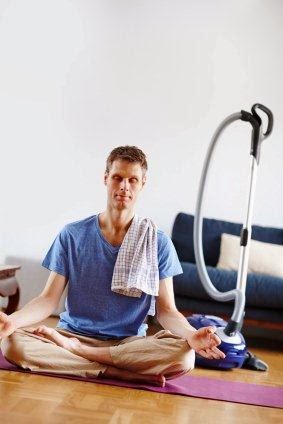
Hoovering – Should it be part of your exercise regime?

Last week news articles reported that doing housework, as a means to clean your home and also keep you physically active, may not be as beneficial to the latter as once thought.

A nationwide study, Sport and Physical Activity Survey (SAPAS) used data collected from over 4000 adults in Northern Ireland, to examine how domestic activities contributed to a person’s total physical activity and whether this was related to their BMI. The researchers found that people, who included housework as part of their regular exercise count, were not burning as many calories or raising their heart rate to a level identified to have a positive impact on one’s health. As a result the researchers pointed out that people could be failing to meet weekly target exercise guidelines, despite thinking they are.  


Those who reported more domestic activity tended to have higher body mass indexes, than those who reported less domestic activity

The Governments guidelines for physical activity in the UK suggests that adults should take at least 150 minutes of moderate intensity physical exercise each week. This could be 30 minutes 5 times a week. To ensure that everyone includes some activity on a daily basis, recommendations have included gardening, housework and DIY projects. As these activities can be carried out in the comfort of one’s home they are more likely to appeal to the majority of the population, who for whatever reason, may face issues or resistance when say going to the gym.

However, although housework is regarded as “exercise” the research demonstrates that we need to be working harder at it to make it count as a workout, so that we can reap the health benefits associated with regular exercise.  

Professor Marie Murphy, who led the study said: “Housework is physical activity and any physical activity should theoretically increase the amount of calories expended. But we found that housework was inversely related to leanness which suggests that either people are overestimating the amount of moderate intensity physical activity they do through housework, or are eating too much for the amount of activity undertaken”    

Physical activity needs to make you out of breath or sweaty to count as moderate to vigorous. The study should be a reminder that the intensity of activity is important as well as the amount and type of activity. It could therefore be said that hoovering and other domestic work, need not be disregarded as ineffective forms of exercise, rather, when domestic work is carried out, extra vigor should be applied to work up a sweat. Additionally, incorporating other forms of exercise into your routine, such as brisk walking, cycling, dancing could help ensure that you stay active and healthy.


For more information on physical activity and the benefits visit the NHS Choices website. Understand the importance of physical activity and learn ways to promote and encourage others to be more active through the RSPH Level 2 Award in Understanding Health Improvement, Level 2 Award in Physical Activity.   

Friday, 2 August 2013

The Vicious Cycle Between Poor Mental Health and Unemployment


A recent report by the BBC titled “mentally ill people hit hard by recession” argued that between 2006 and 2010 unemployment rates for people with mental health problems rose significantly.

The news item was reporting on a research study which sought to discover whether people with mental ill health are more likely to be discriminated against both in the job market and in society.  

The study which was carried out by researchers from King’s College London, the London School of Economics and Political Science, and John Hopkins Bloomberg School of Public Health, looked at data on the rates of employment and mental health problems from 27 EU countries.

The researchers focused on data derived from 2006 (prior to the 2008 economic crisis) and 2010. From both years, a consistent pattern emerged that people with mental health problems were more likely to be unemployed. Interestingly however, the study found that by 2010 the gap in unemployment rates between people with and without mental health problems had increased.

The researchers proposed that people with a mental health condition suffered more by the economic recession of 2008, and will have been more vulnerable to discrimination and unemployment. Download the published report in the peer-reviewed open access medical journal PLOS One.

Taking a deeper look

The researchers used data from two surveys: The Eurobarometer Mental Wellbeing 2006 and the Eurobarometer Mental Health 2010 survey. 30,000 citizens from 27 EU countries took part in the survey and information was collected through face to face interview.

From the 2006 and 2010 surveys it was found that compared with the general population people with mental health problems were:

1.     More likely to be female
2.     Significantly older
3.     More likely to have finished education before 20 years of age or had no formal education
4.     More likely to be unemployed/retired and unable to work
5.     Less likely to be in paid employment

The study also revealed that although females were more likely to have a mental health problem, males were more likely than females to be unemployed. In 2010 22% of men with mental health problems were unemployed compared with 14% in 2006. For women these were 17% and 12% respectively.

Interestingly, the researchers also found that in 2010 (but not in 2006) people with mental health problems were more likely to be unemployed if they lived in countries where the majority of people agreed with the statement “people with mental health problems are a danger to others”.

The (vicious) cycle

People with mental health problems are less likely to be in employment. This can however perpetuate their condition by causing them to become further isolated and anxious about their financial circumstance.

During periods of economic hardship, this may become more apparent as people with mental health problems may be more susceptible to losing their job and are unable to find a new one in a competitive labour market.

Beth Murphy, head of information at mental health charity Mind, said the findings were worrying “Losing your job is a sudden change and there can also be financial implications through loss of income, which in itself can cause anxiety”
“Specifically redundancy is known to trigger depression and suicidal thoughts”.

Conclusion:

Undeniably, the research paints a very bleak picture of the reality of people who have poor mental health. Not only do they have to live with and tackle their own mental health condition, but their problems are further heightened by the fact that they are more likely to loose their job or be unemployed.

What we have to remember is that no one is exempt from experiencing a mental health problem - it can happen to anyone of us. Statistics reveal that at least one in four people will experience a mental health problem at some point in their life, therefore, it is essential that a) society does not stigmatise/discriminate against people with mental health conditions and b) that we learn techniques on how to protect ourselves and improve our mental health and wellbeing. 

It is imperative that Governments, Local Authorities and communities ensure that they promote social participation of individuals with mental health problems (particularly during recessions) and that efforts are made to target the most vulnerable people in society. Evidence reveals that participation in meaningful activity is associated with improved self esteem and good mental health. Having strong social relationships/networks can reduce isolation and help to improve mental health and recovery as well as preventing mental health problems.

We know that improved mental health and wellbeing is associated with a range of better outcomes, from physical health to higher education achievement. Thus in a strategic attempt to improve the whole population’s mental health and wellbeing the Five Ways to Wellbeing has been developed by nef (new economics foundation) which is a set of evidence based public health messages that can be utilised by everyone.

For more information on how you can get trained to improve and protect your mental health and the community you serve click here.


Let us know what simple things you do to help improve your mental health and wellbeing?

Thursday, 13 June 2013

Is premature death a postcode lottery?

A new interactive map, Longer Lives, produced by Public Health England (PHE) demonstrates the variation in premature death across England through a colour code technique. The map which ranks 150 authorities by their premature death rates – that is before the ages of 75 – also allows users to view these areas by five of the most common causes of premature (and preventable) deaths.

These include cancer, heart disease, stroke, lung disease and liver disease. The map further enables users to view the areas which are the most socio-economically deprived.

Interestingly, the map clearly identifies the North of England as having large proportions of premature mortality, where deprivation is more prevalent, compared with the South of England where good health is more evident particularly in affluent areas. However, a few exceptions to this do exist in the South especially in London boroughs, Southwark, Tower Hamlets, Newham, where health is regarded as extremely poor and deprivation seemingly high. 

To view the coloured coded map and see how your area rates click here.

Why such a divide between North and South

The reasons as to why such a variation exists could be due to rates of poverty, obesity levels, alcohol consumption and smoking. Historical factors such as decline of the manufacturing industry in the North, may have increased unemployment and hence poverty in the regions. Other factors may include the social and cultural environment as well as access to education, housing and transport.

Nonetheless, what the map does highlight are areas in which local authorities need to pay particular attention to improve health and tackle health inequalities – it is unacceptable in our modern day society for such a disparity of mortality to exist depending on location.

The RSPH has been working with Well London to provide health improvement training and education to people from the most hard to reach and deprived areas of London, more information can be found here.


Regardless of where we live, all of us can take simple steps to improve our health and even positively influence the people around us to make real and lasting lifestyle changes. Our most popular qualification Understanding Health Improvement Level 2 Award, and Understanding Behaviour Change Level 2 Award provide practical knowledge of the benefits of good health and wellbeing. They examine how we can reduce health inequalities  through basic understanding of the concept of health, building confidence in talking about health and encouraging people in the community to seek health services available to them. For more information please contact Gina Mohajer gmohajer@rsph.org.uk.